
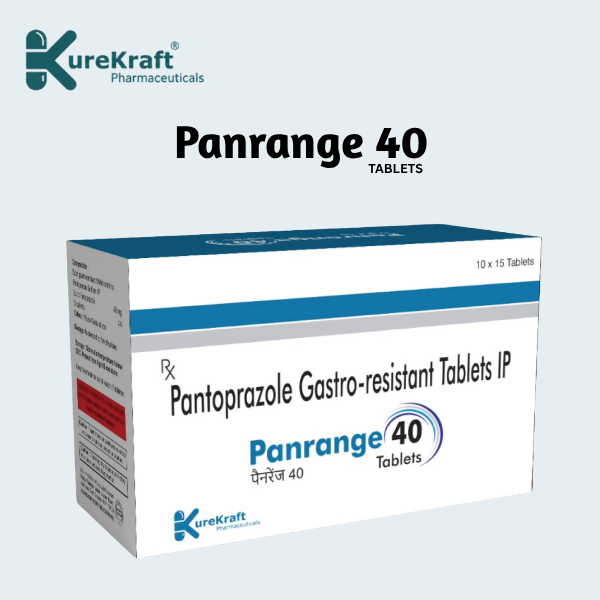
Pantoprazole Gastro Resistant Tablets IP
Panrange 40
Introduction
Pantoprazole Gastro Resistant Tablets IP – Panrange 40 is a clinically trusted medication formulated to effectively reduce excessive gastric acid production. As a powerful member of the proton pump inhibitor (PPI) class, Pantoprazole delivers sustained acid suppression, ensuring long-lasting relief from acid-related gastrointestinal disorders.
At KureKraft Pharmaceuticals, we focus on delivering accurate, reliable, and medically aligned information about essential therapeutic solutions. Pantoprazole has become a cornerstone therapy for managing acidity, heartburn, gastroesophageal reflux disease (GERD), and peptic ulcer disease. Its gastro-resistant formulation ensures that the active ingredient remains protected from stomach acid until it reaches the intestine, maximizing effectiveness and stability.
Comprehensive Guide to Uses, Benefits, Dosage, and Safety
What is Pantoprazole Gastro Resistant Tablets IP (Panrange 40)?
Pantoprazole Gastro Resistant Tablets IP (Panrange 40) is an oral medication specifically designed to suppress stomach acid production. The gastro-resistant coating prevents the tablet from dissolving in the acidic stomach environment, ensuring controlled release in the intestine where absorption occurs efficiently.
Pantoprazole is widely prescribed for:
- Acidity
- Heartburn
- Gastroesophageal Reflux Disease (GERD)
- Peptic Ulcer Disease
- Acid-related indigestion
By inhibiting the proton pumps in the stomach lining, Pantoprazole directly reduces acid secretion at its source.
Pantoprazole Uses
Treatment of Acidity
Excess gastric acid often leads to burning sensations in the chest, abdominal discomfort, bloating, and digestive distress. Pantoprazole works at the molecular level to block acid production, offering consistent relief and improving digestive comfort.
Treatment of Gastroesophageal Reflux Disease (GERD)
GERD occurs when stomach acid flows back into the esophagus, causing irritation and inflammation. Symptoms commonly include:
- Persistent heartburn
- Sour regurgitation
- Chest discomfort
- Chronic cough
- Difficulty swallowing
Pantoprazole significantly reduces acid levels, helping to protect the esophageal lining and relieve reflux symptoms.
Treatment of Peptic Ulcer Disease
Peptic ulcers develop when stomach acid damages the protective lining of the stomach or small intestine. By lowering acid secretion, Pantoprazole Gastro-Resistant Tablets IP create an optimal environment for ulcer healing and tissue regeneration.
How Pantoprazole Works
Pantoprazole belongs to the class of medications known as proton pump inhibitors (PPIs). It works by blocking the H+/K+ ATPase enzyme system, commonly referred to as the proton pump, in the stomach lining.
This mechanism:
- Prevents the final step of acid production
- Significantly reduces gastric acidity
- Relieves acid-related indigestion and heartburn
- Promotes healing of irritated tissues
By targeting acid production at its source, Pantoprazole delivers reliable and sustained symptom control.
Benefits of Pantoprazole Gastro-Resistant Tablets IP
Effective Acid Suppression
Pantoprazole provides powerful and consistent reduction of gastric acid, improving comfort and digestive stability.
Long-Lasting Relief
The gastro-resistant formulation ensures extended therapeutic action, reducing the frequency of acid-related symptoms.
Enhanced Ulcer Healing
Lower acid levels promote faster recovery of damaged gastric tissues.
Well-Tolerated Therapy
Pantoprazole is generally well tolerated when taken as prescribed, making it suitable for short-term and physician-guided long-term therapy.
Dosage and Administration
Pantoprazole should be taken exactly as directed by a healthcare professional.
General Guidelines:
- Take one tablet 1 hour before a meal, preferably in the morning.
- Swallow the tablet whole with water.
- Do not crush or chew the tablet.
The dosage depends on:
- Severity of symptoms
- Underlying condition
- Patient response
- Physician’s clinical assessment
If symptoms persist beyond 14 days, further medical evaluation is recommended.
Common Side Effects of Pantoprazole
Most side effects are mild and typically resolve as the body adjusts to the medication.
Common Side Effects Include:
- Dizziness
- Nausea
- Abdominal pain
- Flatulence
- Headache
- Vomiting
- Diarrhea
- Joint pain
- Injection site reaction (rare in oral form context)
Medical consultation is advised if side effects persist or worsen.
Long-Term Use and Safety Considerations
Prolonged use of Pantoprazole may increase certain health risks:
- Weak bones (osteoporosis risk)
- Magnesium deficiency
- Mineral imbalance
Patients requiring extended therapy should maintain adequate dietary intake of calcium and magnesium or use supplements as prescribed by a doctor.
Important Precautions
Before starting Pantoprazole, patients should inform their doctor if they have:
- Severe liver disease
- History of allergic reactions to PPIs
- Osteoporosis or bone weakness
- Kidney-related symptoms
- Ongoing chronic medical conditions
Seek immediate medical attention if you experience:
- Decreased urination
- Edema (fluid retention swelling)
- Lower back pain
- Persistent nausea
- Fatigue
- Rash or fever
These may indicate a kidney-related complication requiring prompt evaluation.
Lifestyle and Preventive Tips to Control Acidity
To enhance treatment effectiveness, we recommend the following healthy practices:
- Avoid excessive carbonated beverages and soft drinks
- Limit citrus juices and fried foods
- Reduce caffeine intake from tea and coffee
- Avoid alcohol and smoking
- Do not eat late at night
- Avoid lying down immediately after meals
These measures significantly reduce acid production and complement Pantoprazole therapy.
Why Pantoprazole Gastro-Resistant Tablets IP Remain a Preferred Therapy
Pantoprazole continues to be widely prescribed because it:
- Provides dependable acid control
- Offers long-duration relief
- Supports ulcer healing
- Is suitable for various acid-related disorders
- Maintains a strong safety profile under medical supervision
Its proven efficacy and structured release mechanism make Panrange 40 a reliable choice in gastrointestinal care.
Conclusion
Pantoprazole Gastro-Resistant Tablets IP (Panrange 40) represent a powerful and clinically trusted solution for managing acidity, heartburn, GERD, and peptic ulcer disease. By effectively suppressing gastric acid production at the source, Pantoprazole alleviates discomfort, promotes healing, and enhances digestive well-being.
At KureKraft Pharmaceuticals, we emphasize informed healthcare decisions supported by accurate medical information. When used responsibly and under professional guidance, Pantoprazole remains one of the most effective proton pump inhibitors available for long-term digestive relief.
Trusted Protection for Effective Infection Control

Broad-Spectrum Action
Effective against a wide range of bacterial infections

Resistance Protection
Clavulanic Acid blocks beta-lactamase enzymes

Enhanced Efficacy
Boosts Amoxycillin’s infection-fighting power

Faster Recovery
Helps achieve quicker and reliable treatment outcomes